
The commercial HVAC market is growing fast, from USD 45.47 billion in 2025 to USD 73.24 billion by 2031. This growth comes from more cooling demand in AI data centers, new refrigerant rules, and stricter ventilation standards. Demand increases further in summer when cooling needs are highest.
Heat waves increase cooling demand, which leads to more HVAC inspections, repairs, maintenance visits, and emergency service requests. Higher workloads force fleet vehicles to cover longer routes and use more fuel. Fleet managers also face greater dispatch challenges as refueling needs increase.
A reliable HVAC fleet fueling strategy helps reduce refueling delays, supports daily operations, and allows crews to complete more service work. HVAC fleets can use Fuel Logic’s fleet fueling services for on-site and overnight delivery.
Why HVAC Fleets Face Problems During Heat Waves
The demand for HVAC increases during summer because heat levels rise and service requests grow quickly. HVAC fleets face the following problems:
Emergency Service Demand Increases
Emergency service demand rises during heat waves because AC systems fail in many homes and buildings. Dispatch teams receive higher call volume, and technicians travel to more service locations during the day. Extended operating hours place more load on HVAC fleet management as service requests increase in hot weather.
HVAC Trucks Stay on the Road Longer
Traffic becomes slow with frequent stops, which increases travel time between service points. As a result, crews reach fewer locations in a day, and work piles up. Job sites also hold technicians for longer, which delays movement to the next task.
Fuel Consumption Rises During Extreme Heat
Fuel consumption in HVAC fleets increases because truck air conditioning runs during long summer travel. Engine cooling systems also draw extra power during heavy work and idle periods. Moreover, generator-powered tools raise fuel use during service tasks, and fueling HVAC trucks becomes a regular field task.
Keep your HVAC fleet fueled through peak season
Fuel Logic delivers diesel and gasoline to your trucks overnight — no mid-day stops, no detours.
How Heat Waves Affect HVAC Fleet Fuel Usage
Fuel consumption in HVAC fleets rises with increased travel demand, on-site work, and equipment load during heat waves. Let’s discuss how heat waves change regular work patterns for HVAC fleets:
Increased Idling at Service Locations
Technicians run truck AC during paperwork and diagnostics at service sites, which increases fuel use. Waiting time between dispatches also extends idle time and increases fuel consumption.
More Fuel Stops During Shifts
Managers stop service routes at midday for refueling purposes. They detour to gas stations, which increases fuel consumption and also travel time between job sites.
Longer Routes Reduce Efficiency
Longer routes reduce the fuel efficiency of HVAC fleets because traffic builds up and drivers take new routes during emergencies. Multi-stop dispatch schedules also increase travel between jobs, which further raises fuel use for HVAC fleets during heat waves.
Traditional Fueling vs Mobile Fueling for HVAC Fleets
Traditional fueling and mobile fueling work in different ways for HVAC fleets. Each method has its own advantages and limitations that affect travel time, fuel use, and work planning. Comparing fleet truck fueling solutions side by side helps fleet managers choose the option that best fits their routes and budget.
Gas Station Refueling
Gas station fueling may feel economical for fleets, but it has multiple problems that raise total expense over time. It creates HVAC service delays because technicians move away from job sites to refuel vehicles. Resultantly, longer routes and peak-hour congestion raise travel time between stops.
Moreover, fuel receipt tracking issues also increase follow-up work for fleet managers.
Mobile Fueling
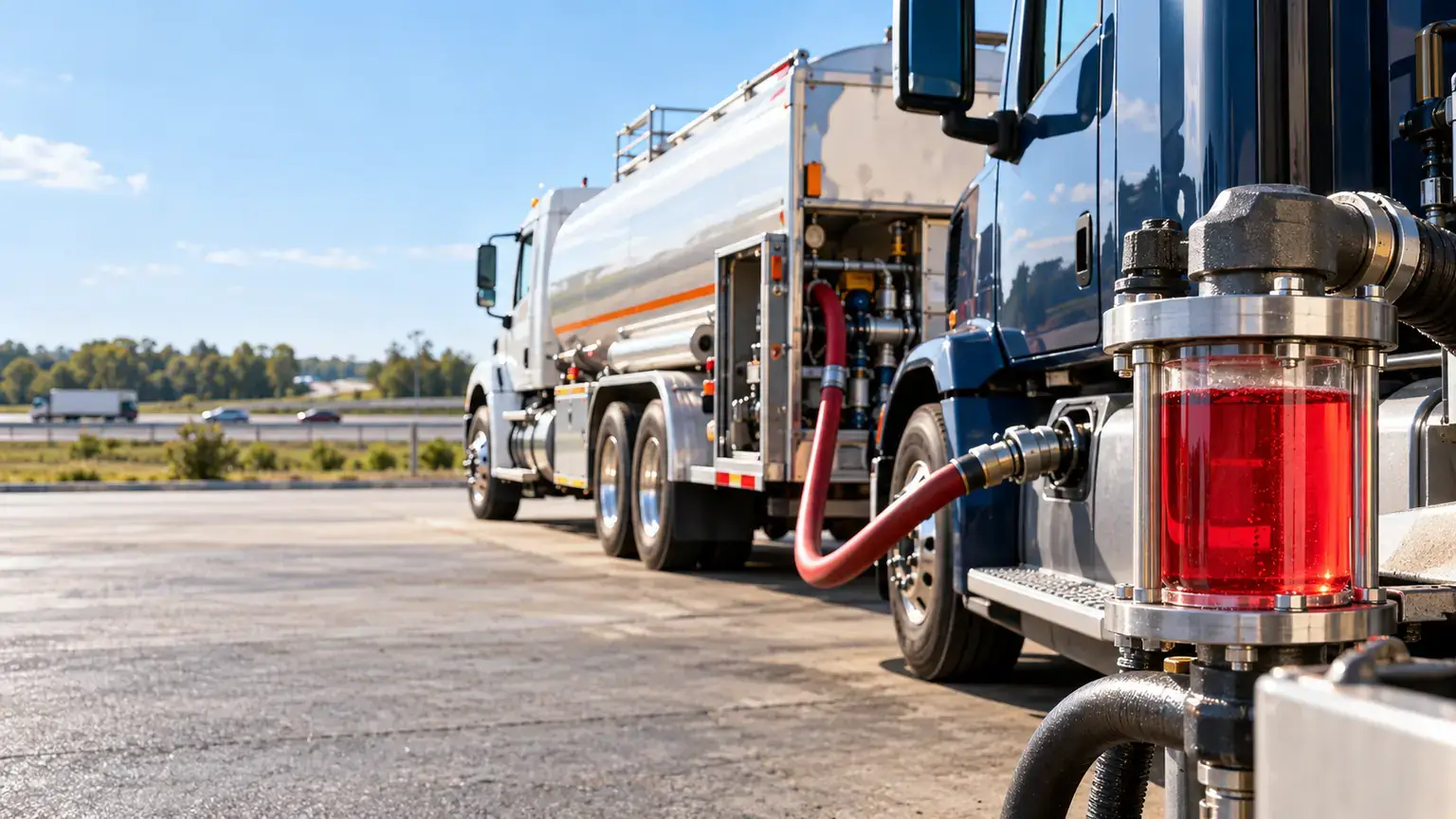
Mobile fueling supports HVAC fleets by fueling trucks overnight, which cuts off-route driving. As a result, technicians get more working hours during the day, and dispatch teams manage assignments more effectively.
Stop routing drivers to the pump
Fuel Logic fuels your HVAC fleet at your yard or job site — before the shift starts.
Why HVAC Technician Response Times Slow Down During Heat Waves
Heat waves place a heavy demand on HVAC service operations and affect technicians’ travel speed to job sites. This issue matters for fleet businesses because delays change service quality and increase workload pressure for field teams. Here are the main reasons behind slower response times:
Dispatch Backlogs
Emergency calls stack up during peak demand, which delays scheduling in summer fleet operations. Longer travel distances between job sites also slow technician movement and increase response time pressure.
Fuel Stops Interrupt Scheduling
Technicians have to leave the job site to visit distant fuel stations for refueling. This is why service call gaps increase, and schedules face delays. This also reduces on-site work duration.
Vehicle Wear Increases
Vehicle tyres wear out faster due to long travel, and cooling systems take extra load during service jobs. Above all, batteries drain faster in extreme temperatures, which reduces HVAC fleet performance during heat waves.
Operational Problems HVAC Fleets Commonly Face in Summer
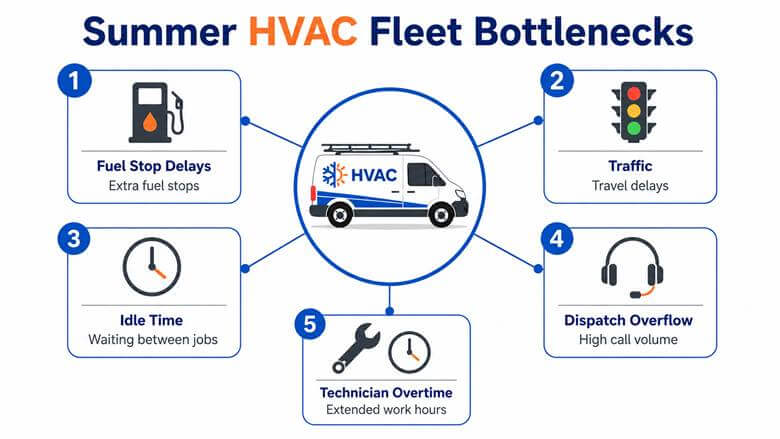
Summer brings various operational challenges that impact HVAC fleet performance and service flow. Understanding these problems helps fleet operators respond faster and manage field work with fewer delays and lower service pressure.
Driver Fatigue During Extended Shifts
Driver fatigue increases during long shifts as drivers move between many job sites in one day. This condition lowers focus and slows reaction time.
Fuel Card Tracking Problems
Fuel card tracking problems grow when drivers make frequent stops and record fuel use at many locations during busy schedules. This creates missing details in fuel records, which impacts cost tracking.
Higher Idle Costs
Higher idle time increases fuel consumption as vehicles wait at job sites during hot conditions and high service demand. This also increases cost pressure and contributes to fleet downtime during the summer.
Missed Preventive Maintenance Windows
Busy summer schedules cause delays in service checks, due to which inspections get postponed. This lowers equipment reliability and increases repair work for HVAC fleet operations.
Fuel Supply Planning Issues
Fuel supply planning issues rise when service routes change, and fuel stops become difficult to manage. HVAC fleet fueling also becomes uneven, which affects field operations during busy service times.
How HVAC Fleets Prepare for Heat Waves
Preparing for heat waves helps HVAC fleet teams handle workload changes and manage service demand. Here is how HVAC fleets can prepare for heat waves:
1. Scheduling Overnight Fueling
Scheduling overnight fueling reduces daytime fuel stops that delay service work. This supports consistent routes and improves field operations during summer periods. Use mobile fueling for HVAC fleets to reduce refueling hassles during the day.
2. Pre-Positioning Fuel Supply
Pre-positioning fuel supply means placing fuel stocks near job routes before work begins.
Managers can use a reliable diesel delivery service to refill these locations before operations start. Fuel stays near service areas instead of central depots, which helps crews manage work on time.
3. Monitoring Idle Time
HVAC fleets must monitor idle time by tracking how long trucks keep engines on during service stops. This shows fuel use during waiting periods and provides data on fuel loss at work.
4. Planning Emergency Dispatch Routes
HVAC fleet operators must set alternative routes for emergency dispatch. This helps handle urgent service calls when service requests increase. This also reduces travel delays and helps crews reach job sites earlier.
5. Keeping Trucks Fully Fueled Before Morning Dispatch
HVAC fleets must fuel trucks before morning dispatch so vehicles start the day prepared for service calls. This reduces fuel stops on routes and saves time. Businesses can use on-site fleet fueling services to start jobs without interruptions.
Fuel Logic handles steps 1 and 5 for you
We schedule overnight delivery so your trucks are full before morning dispatch — no coordination hassle, GPS-timestamped every time.
Learn how Fuel Logic supports commercial HVAC fleets with on-site and overnight fuel delivery services.
Best Fueling Strategy for HVAC Fleets During Summer
Service calls increase in hot weather, so HVAC fleets need a fueling plan that fits a higher workload. HVAC fleets can refuel their trucks before starting the work instead of stopping for fuel between service calls.
Scheduling a mobile fleet fueling service during off-hours is also an excellent strategy. This saves travel time, reduces fuel stops, and helps drivers spend more time at customer locations.
When Mobile Fueling Makes Sense
Mobile fueling is suitable for HVAC fleets that cover large service areas because it helps drivers avoid repeated visits to fuel stations. It also benefits fleets with many dispatch calls, where every fuel stop can delay customer service.
Multi-vehicle HVAC fleets can use on-site diesel delivery services to refuel every truck before the workday starts. This allows them to reduce unnecessary travel during service hours.
Fleets That Benefit Most
Commercial HVAC contractors see better results when jobs are spread over long routes, and service stops stay limited. In the same way, emergency AC repair fleets gain benefits because they reduce fuel stops and reach job sites faster during urgent calls.
Similarly, multi-city service operations use fuel delivery for HVAC contractors, which supports travel between cities and reduces refuel delays.
⚡ Key Takeaways
- HVAC fleets use more fuel during heat waves because trucks idle longer and routes become less predictable.
- Fuel stops reduce technician availability because drivers spend time away from service calls when demand is high.
- Mobile fueling lets trucks start shifts with full tanks and fewer interruptions.
- Fueling during work hours can slow dispatch and delay service calls.
- Overnight fueling reduces downtime and helps maintain stable summer operations.
Frequently asked Questions
Why do HVAC fleets use more fuel during heat waves?
HVAC fleets use more fuel during heat waves because service demand increases in the summer season. Trucks spend longer on the road, idle for longer periods, and travel to additional job sites, which increases fuel consumption.
How does idling affect HVAC fleet costs?
Idling increases fuel consumption because the engine keeps running without moving the vehicle. In HVAC fleets, this raises fuel costs and causes more wear on engine parts over time.
What causes HVAC service delays during summer?
HVAC service delays happen in the summer because of high service demand and traffic issues. Longer travel routes also slow down dispatch. Moreover, time spent on fuel stops or equipment checks also reduces the number of jobs completed each day.
Is mobile fueling useful for HVAC companies?
Yes, mobile fueling is useful for HVAC companies because it refuels trucks without taking them off service routes. This reduces fuel stops, saves travel time, and helps crews stay focused on completing work orders.
How can HVAC fleets reduce downtime during extreme heat?
HVAC fleets can reduce downtime during extreme heat by refueling trucks before shifts and using mobile fueling services to avoid mid-day fuel stops. They can also plan routes and monitor idle time to reduce unnecessary engine use.
What is overnight fleet fueling?
Overnight fleet fueling is a service where trucks are refueled after working hours instead of stopping during the day. This ensures vehicles start the next shift with full tanks and reduces delays during service routes.
Conclusion
Heat waves increase service demand and raise fuel use at the same time, which affects HVAC fleet operations. As a result, fuel stops during the day reduce technician availability and slow down service work. Overnight fueling helps trucks start the day ready, and mobile fueling also keeps fleets active without interruptions during high service demand.
Need your HVAC fleet ready before the next heat wave?
Fuel Logic delivers diesel, gasoline, and DEF to your trucks on-site and overnight — across multiple locations nationwide.
Get Reliable Fuel Delivery for Your HVAC Fleet
Need your HVAC fleet ready before the next heat wave? Fuel Logic provides reliable on-site and overnight fuel delivery to help your trucks stay fueled.
Our services include supplying high-quality gasoline, diesel, off-road diesel, and DEF for HVAC fleets and commercial operations. We deliver fuel to multiple locations across the United States to support reliable fleet performance. Contact our customer support team directly to place your order, or visit our FAQ section for general questions and service details.