

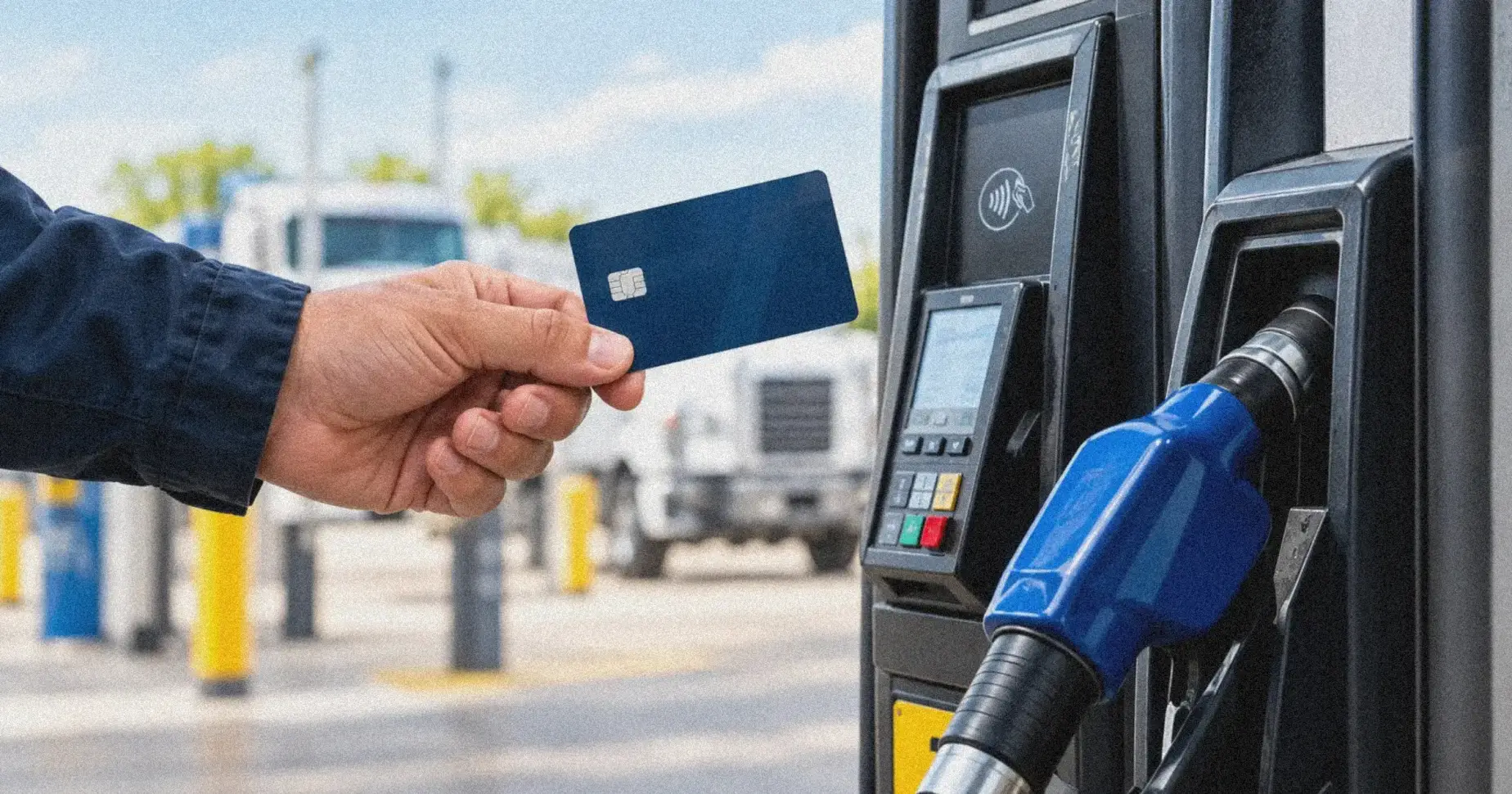
Both fuel cards and mobile fueling get fuel into your vehicles. The right choice depends on cost, control, convenience, and how your fleet actually operates, not on which option sounds more modern. This guide breaks down the real differences so you can make the call with real information instead of a guess.

Key Takeaways
- Fuel cards = flexibility, data tracking, and convenience for remote drivers
- Mobile fueling = time savings, cost control, and on-site accountability
- Blended models offer the best of both worlds
- Evaluate based on route type, refueling volume, and downtime costs
Understanding the Two Fueling Options
What Are Fuel Cards?
Fuel cards are fleet-specific credit cards for fuel purchases. They track spending per driver or vehicle, work at participating gas stations, and often come with discounts or rebates built in.
What Is Mobile Fueling?
Mobile fueling delivers fuel directly to trucks or equipment on-site. Drivers skip station stops entirely, and fuel data gets logged digitally, date, time, gallons, every time. It’s a strong fit for large fleets or fixed locations.
Comparing Fuel Cards vs. Mobile Fueling
Cost and Pricing Transparency
Fuel cards expose you to fluctuating pump prices plus card fees. Mobile fueling runs on a fixed or negotiated rate per gallon, which makes weekly cost per vehicle easier to predict and compare.
Control and Accountability
Fuel cards rely on driver compliance to actually work as intended. Mobile fueling logs every gallon by vehicle ID automatically, which makes it far easier for managers to track fuel waste or misuse without depending on someone else’s habits.
Time and Efficiency
Drivers using fuel cards spend real time at stations. Mobile fueling saves an estimated 15 to 30 minutes per refuel [VERIFY: confirm this range against a current primary source before publishing]. Across a fleet of 10 to 50 vehicles, that time savings adds up to a real number worth quantifying for your specific operation.
Accessibility and Location
Fuel cards work better for long-haul or scattered routes where a truck could be anywhere on a given day. Mobile fueling fits depots, yards, or local fleets best. Plenty of fleets mix both strategies for hybrid operations that don’t fit neatly into one category.
When to Use Fuel Cards
For Fleets with Drivers on the Road All Day
Long-haul trucking, service routes, or unpredictable routes all benefit from the flexibility fuel cards provide, since mobile fueling simply can’t reach a driver who’s somewhere different every day.
For Fleets That Need Detailed Purchase Data
Itemized transaction reports let you track fuel type, merchant, and spend per driver in detail.
Key Drawbacks to Watch
Price varies by region with no control over it, the station network is limited to participating locations, and cards create real potential for misuse or loss if nobody’s watching closely. Pairing card usage with fleet fueling services data integration helps close that visibility gap even for drivers using cards.
When to Use Mobile Fueling
For Fleets Based in One Location or Region
Construction, delivery, landscaping, or municipal fleets running from a set schedule and centralized operation are the clearest fit for mobile fueling.
For Managers Focused on Time Savings
No station downtime means more productive hours, and real-time tracking shows exactly how many gallons got delivered to each unit.
Environmental and Safety Benefits
Reduced vehicle idling and emissions, controlled fueling that prevents spills, and fewer off-site trips all lower risk exposure at the same time they lower cost. See Fuel Logic’s mobile fueling service for how this actually runs day to day.
Blended Fueling: When to Use Both
Plenty of fleets mix fuel cards for traveling units with mobile fueling for a base fleet. Combined data from both sources improves total fuel visibility, and the blend reduces monthly waste and time loss more than either option alone would.
How to Choose the Right Option for Your Fleet
Assess your fleet’s routes, schedules, and average downtime honestly. Use mobile fueling if vehicles start and end at the same depot most days. Use fuel cards if drivers travel across multiple states with no consistent base. Combine both if your fleet has real variation between vehicles doing very different kinds of work.
FAQs
What’s the biggest difference between fuel cards and mobile fueling?
Fuel cards depend on drivers stopping at a station; mobile fueling brings fuel to the vehicle directly, removing that stop and the time it costs.
Which option saves more money for fleets?
It depends on fleet type and volume. Mobile fueling typically saves more for fleets based at a fixed location with predictable usage; fuel cards can be more cost-effective for widely dispersed, unpredictable routes.
Can I use both fuel cards and mobile fueling together?
Yes, a blended model is common and often the best fit for fleets with both a fixed base and vehicles that travel widely.
How does mobile fueling work at night or on weekends?
Mobile fueling is typically scheduled for whenever the vehicles are parked and available, often overnight, so it doesn’t interfere with active operating hours.
Is mobile fueling safe for diesel trucks?
Yes, mobile fueling providers use trained technicians and equipment built specifically for on-site delivery, which is standard practice across the industry.
Does Fuel Logic deliver to my fleet yard?
Fuel Logic delivers to fleet yards and job sites directly. Talk to Fuel Logic to confirm coverage for your specific location.
Have more questions? Contact Fuel Logic to schedule a fleet fuel delivery.



