
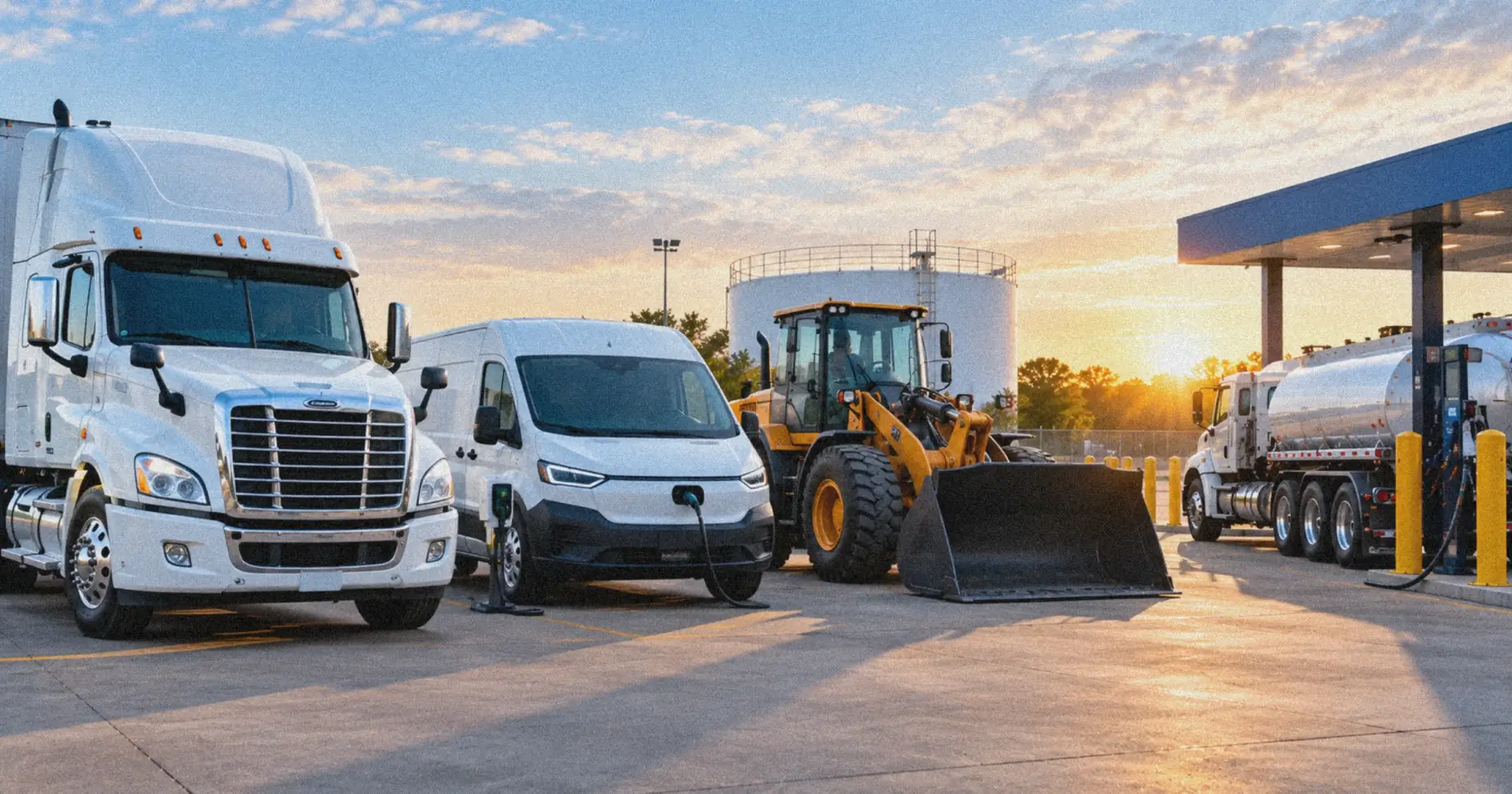
Many fleets assume pumping fuel in-house is cheaper. The price per gallon usually looks better on paper. But hidden costs, labor, downtime, card fees, and fuel shrinkage, tell a different story once you actually run the numbers. This comparison covers the real cost difference between in-house fueling and mobile fuel delivery, so you can choose the method that’s actually more profitable, not just the one with the lower sticker price.

Take Control of Your Fleet Fuel Costs
Simplify fleet fueling, reduce unnecessary expenses, and keep your vehicles moving with dependable fuel solutions from Fuel Logic.
⚡ Key Takeaways
- Fuel is not the only expense. Labor and time are the bigger drains.
- Fuel card misuse and unauthorized fill-ups create preventable loss.
- Retail fuel pricing is unstable. Contracted delivery pricing brings cost control.
- Driver productivity rises when fueling is removed from their job.
- Mobile fueling turns fuel from a task into a managed strategy.
- In-house fueling may work for very small fleets, but it fails as operations scale.
Understanding In-House Fueling Costs
Fuel Purchase and Storage Expenses
Buying fuel at retail prices, or running your own storage tank, comes with its own cost layer beyond the price per gallon: tank maintenance, compliance requirements, and the capital tied up in equipment dedicated to one job.
Labor and Driver Time at the Pump
Every trip to a gas station pulls a driver off the job they’re actually paid to do. That’s real labor cost hiding behind a “cheap” per-gallon price. A truck and driver cost real money to operate per hour, commonly in the range of $150 to $200 [VERIFY: confirm current figure against Approved Claims] once you count the vehicle, insurance, and overhead, and every pump stop spends that hourly cost on something other than the job.
Maintenance and Compliance of Fuel Tanks
Running your own fuel storage means spill prevention requirements, regular inspections, and equipment upkeep that doesn’t show up on a fuel receipt but shows up on a maintenance budget instead.
What Mobile Fuel Delivery Includes
Direct-to-Vehicle or Equipment Fueling
Fuel comes to the vehicle or equipment directly, on-site, instead of the vehicle leaving to find fuel. That single shift removes the driver detour entirely.
Predictable Bulk Pricing and Scheduling
Delivery pricing gets built around actual usage and a real schedule, which brings a level of predictability that fluctuating retail pump prices don’t offer.
Reduced Idling and Downtime
Vehicles and equipment stay in service instead of sitting in a fuel line or making a detour, which keeps productive hours where they belong.
Hidden Costs Fleet Managers Overlook
Driver Detours to Fuel Stations
Every detour is time, mileage, and wear that never shows up as a “fuel cost” anywhere, even though it’s a direct consequence of how fuel gets purchased.
Fuel Theft or Misuse (Shrinkage)
Unmonitored fills and fuel cards create a gap that’s easy to exploit. Without documentation on every gallon, shrinkage is difficult to catch and even harder to prove.
Fuel Card Fees and Reconciliation Time
Card fees add up, and someone still has to reconcile transactions against actual usage, which is its own quiet labor cost.
Cost Comparison: In-House vs Mobile
| Factor | In-House Fueling | Mobile Fuel Delivery |
|---|---|---|
| Time cost | Driver time lost per fuel stop | Fuel delivered where vehicles already are |
| Pricing control | Exposed to daily retail price swings | Scheduled, more predictable pricing |
| Efficiency | Vehicles leave the job to refuel | Vehicles stay in service |
| Accountability | Harder to trace shrinkage | Documented per-gallon delivery |
Which Option Offers Better ROI?
Fleet size is the biggest variable. As a fleet grows, driver time and downtime scale up right along with it, which makes mobile fueling’s time savings worth more in absolute dollars. Fuel budgeting also gets easier with scheduled delivery, since the price and timing are known in advance instead of whatever the pump happens to charge that day.
Real Fleet Scenarios
Small construction fleet: A handful of vehicles running from one job site may find in-house fueling manageable, especially if a station is already on the route.
Regional trucking operation: More vehicles, more routes, and more driver hours make the cumulative cost of pump detours much harder to ignore, tipping the math toward mobile delivery.
Seasonal agricultural fleet: Heavy seasonal fuel demand concentrated into a short window benefits from scheduled bulk delivery that matches the actual usage spike, instead of scrambling at retail prices during the busiest weeks of the year.
The Case for Switching to Mobile Fleet Fueling
Efficiency: Vehicles and drivers spend more time doing the job and less time chasing fuel.
Safety: Controlled, on-site fueling reduces the exposure that comes with drivers making unscheduled stops.
Budget control: Scheduled pricing and full documentation replace the guesswork of retail fuel spend.
FAQs
Is mobile fuel delivery cheaper than refueling at stations?
Once driver time, downtime, and shrinkage risk are counted, mobile delivery is often cheaper overall, even when the per-gallon price looks higher than the pump at first glance.
How do fleets measure downtime cost per driver?
Track the time spent per fuel stop, multiply by the driver’s fully loaded hourly cost, and multiply again by how often that stop happens across the fleet.
Do mobile fuel services charge extra fees?
Pricing structures vary by provider and volume. Ask for a clear breakdown of what’s included before comparing it against your current in-house cost.
Can small fleets benefit from mobile fueling?
Yes, though the size of the benefit scales with fleet size and fuel volume. Even a small fleet can benefit if driver time or theft risk is a real concern.
If you’ve never actually run this math for your fleet, it’s worth doing before assuming the pump is the cheaper option. Talk to Fuel Logic about a real cost comparison, or order fuel online to see mobile delivery in action.




