

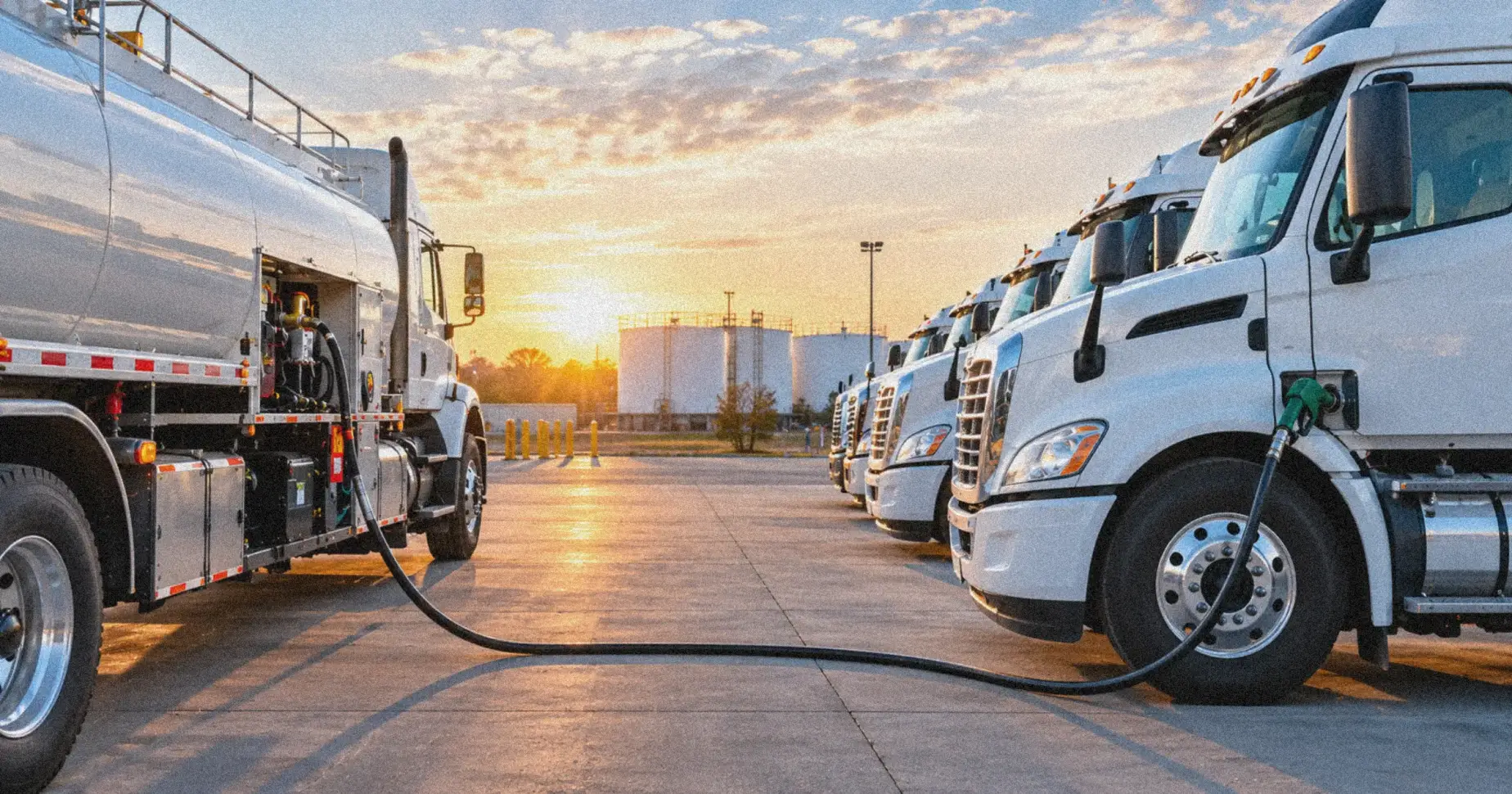
Fuel costs can quietly eat into fleet profits faster than most managers realize. Poor tracking, sloppy fill-ups, and missed data can drain thousands each year without anyone noticing until the totals are already high. This guide breaks down the top mistakes fleets make in managing fuel and shows practical steps to fix each one.

Key Takeaways
- Fuel waste often starts with poor tracking, not just high prices.
- The biggest budget drains come from hidden habits.
- Reliable delivery and data visibility help control costs.
- Partnering with a trusted fuel provider keeps operations predictable.
What Fuel Management Really Means for Fleets
Fuel Management Explained
Fuel management covers monitoring, tracking, and controlling fuel use across every vehicle in a fleet, spanning sourcing, storage, distribution, and reporting. It touches both day-to-day operations and cost-per-mile metrics directly.
Why It Matters
Fuel is often 20 to 40% of total fleet operating costs [VERIFY: confirm this range against a current primary source before publishing], which means poor oversight in this one area leads to hidden waste that’s disproportionate to almost any other line item. Strong management here translates directly to a stronger bottom line.
The Most Common Fuel Management Mistakes
1. Lack of Accurate Fuel Tracking
Manual logs are prone to human error, and missed receipts or unverified fuel use inflate consumption data in ways nobody notices until the numbers stop making sense. See fleet fueling delivery solutions for how automated tracking closes this gap.
2. Ignoring Idle Time and Driver Habits
Idling wastes roughly 0.8 to 1 gallon of diesel per hour, and hard acceleration or over-speeding add up fast on top of that. Telematics or idle alerts are the standard way to identify exactly where that waste is happening.
3. Poor Recordkeeping and Data Silos
Disconnected spreadsheets and outdated tools create data silos, and missing trend data can hide fuel theft or inefficiency for months. A unified tracking platform or fuel card integration solves this by putting everything in one place.
4. Choosing the Wrong Fuel Supplier
Inconsistent deliveries cause downtime, and paying retail pump prices instead of using a bulk or onsite fueling partnership means overpaying for the same fuel. See mobile fueling service options built for stable, predictable pricing.
5. Skipping Preventive Maintenance
Dirty filters, underinflated tires, and worn injectors all waste diesel. Missed inspections can lower fuel efficiency by 10 to 15%, which makes maintenance a direct lever on fuel savings, not a separate budget line.
6. No Fuel Theft Prevention Strategy
Untracked fuel cards and tank siphoning both create loss that’s easy to miss without the right controls. Secure storage, digital logs, and GPS validation all help detect it before it becomes a habit. See diesel delivery service for fleets for delivery that’s documented from the start.
How to Fix Costly Fuel Management Mistakes
Implement Real-Time Fuel Monitoring
Telematics and fuel tracking dashboards let you track consumption per vehicle or per driver, and identify high-use patterns before they grow into a real cost.
Standardize Fleet Fueling Procedures
Scheduled fueling windows and set fill limits, combined with centralizing ordering through a single provider, remove most of the variability that causes these mistakes in the first place. Order fleet fuel online to see what a centralized process actually looks like.
Adopt Fuel Logic’s Onsite Fueling or Mobile Fleet Fueling
Save time and reduce off-route fill-ups, keep verified records with lower per-gallon costs, and hold productivity and budgets steady at the same time. See mobile fleet fueling for how that structure works in practice.
FAQs
What is the most common fuel management mistake?
Lack of accurate fuel tracking tends to be the root cause behind most of the others, since without real data, waste, theft, and inefficiency all look the same on the surface.
How can I monitor my fleet’s fuel use accurately?
Telematics integration, fuel card data, and delivery logs tied to specific vehicles all give you accurate, per-vehicle visibility instead of a single fleet-wide estimate.
What’s the benefit of using a mobile fueling provider?
Mobile fueling removes off-route fill-ups, keeps documented records on every gallon, and typically brings more stable pricing than retail pump purchases.
Can fuel delivery services help reduce waste?
Yes, by replacing unmonitored, ad hoc fueling with a scheduled, documented process that ties every gallon to a vehicle and a delivery record.
Does Fuel Logic provide onsite fueling?
Yes, Fuel Logic delivers fuel directly on-site, removing the need for drivers to leave the job to refuel.
Have more questions? Contact Fuel Logic to schedule a fuel delivery, or order fuel online.



