
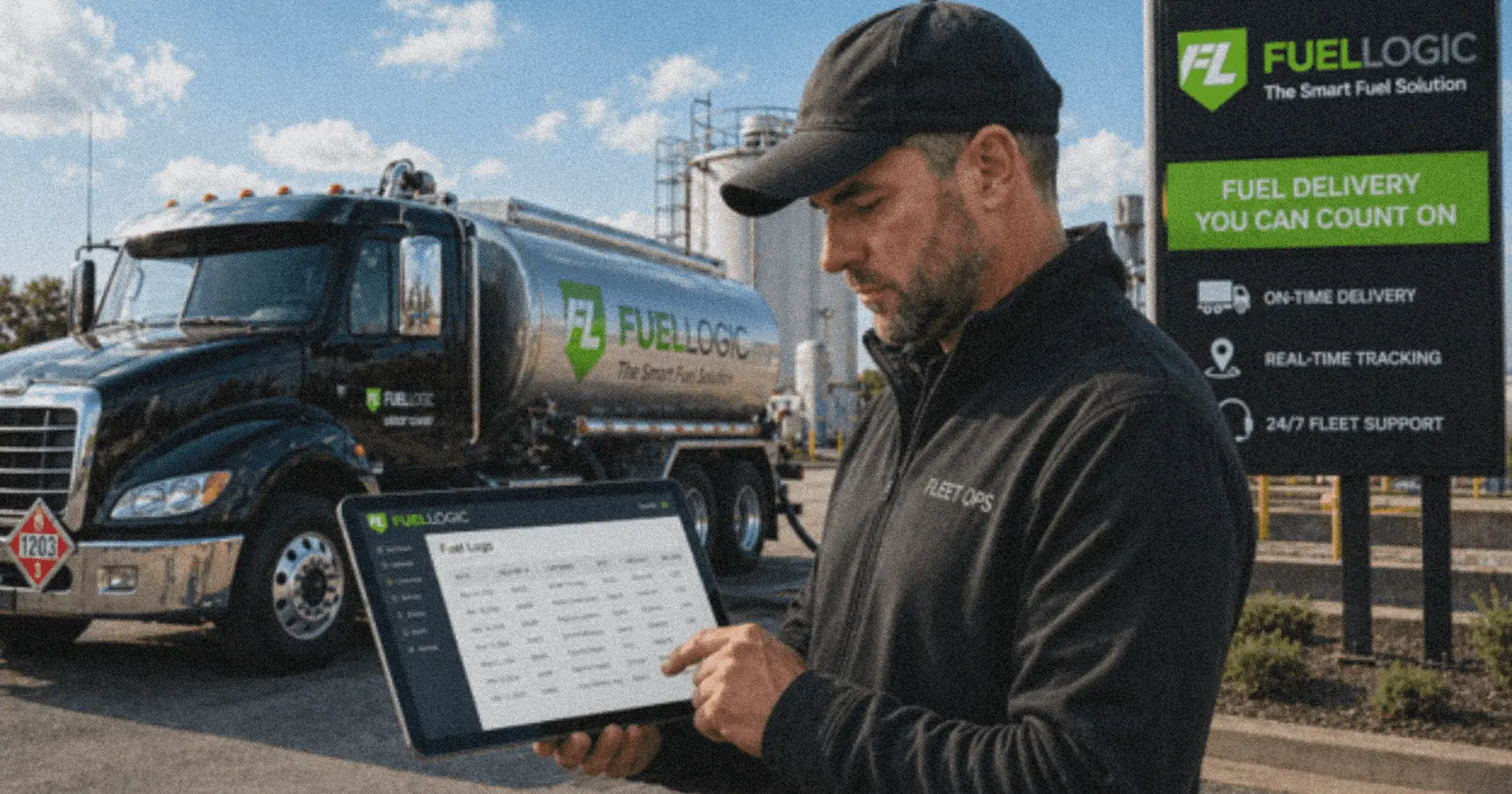

Fuel expenses take up a large share of fleet budgets, and small gaps in fuel control can result in serious losses over time. Many fleets face hidden issues in fuel records that remain undetected until fuel spend increases or records fail to align.
This is why fleet businesses must have a strong driver fuel policy to control excessive fuel expenses. Fuel card misuse, off-route refueling, and incorrect mileage recordings are fuel policy violations that affect fuel budgets and data quality. These issues cause reporting errors and reduce trust in fuel records.
A driver fuel policy sets rules for fuel card access, spending limits, and record tracking. Fuel Logic is a reliable fuel delivery agency that can help fleets track fuel consumption and review driver activity. We offer proper fuel monitoring to help you identify policy violations and respond to them quickly.
Read on for real-world examples of driver fuel policy violations, their causes, and prevention methods that fleet managers can use.
Understanding Driver Fuel Policy Violations
When a driver violates any fuel policy, financial losses and data errors begin to appear. At the same time, trust between drivers and managers weakens. This is why transportation businesses must make sure their drivers fully understand every fuel policy violation:
What Counts as a Violation
Using a company fuel card for personal use is a common violation of fuel policy. A driver uses the card for a private trip or a family car, and that breaks the rule.
Moreover, refueling at off-route or non-approved stations counts as a violation. A driver refuels at a station the company does not list, and this creates gaps in fuel records. Fuel card sharing also counts as a violation. One driver passes the card to another, and this makes tracking and accountability difficult.
Besides these, incorrect or inflated fuel amount entries are another violation. A driver records a higher amount than the actual fuel taken, or adds items that do not relate to the vehicle. As a result, the records do not show the real fuel amount and create differences in reports.
Why Violations Happen
Weak enforcement of policy allows rule violations. When rules exist but no one checks them on a regular basis, drivers may ignore them. This lowers discipline and opens the door to misuse.
Lack of fuel management systems also causes problems. When a company does not track fuel in real time, odd patterns go unnoticed, and small issues grow with time.
Moreover, poor communication about fuel limits or approved locations creates misunderstanding. When drivers do not receive proper instructions, they may refuel at the wrong place or exceed set limits. This results in fuel policy violations that could be avoided with proper guidance.
| Types of Violations | Common Signs | Impact on Fleet Costs |
|---|---|---|
| Using the company fuel card for personal work | Fuel used for private travel or family trips | Higher fuel expense and weak record tracking |
| Off-route refueling | Fuel purchased from stations not listed by the company | Higher fuel costs and unclear reporting |
| Incorrect fuel amount entries | The fuel record shows a higher amount than the actual | Wrong expense data and report mismatch |
| Fuel card sharing | Different drivers use the same card | Loss of driver-level tracking and control |
Already dealing with fuel policy violations in your fleet?
Order fuel delivery at your yard and remove the chance for off-route stops entirely.
Real Examples of Fuel Policy Violations
The following examples show how fuel policy violations can appear in daily fleet operations:
Case 1: Off-Route Refueling
A driver leaves the assigned route and refuels at a station located far from the planned travel path. GPS data shows the vehicle at a different location at that time. Fuel card records show a purchase, but trip logs do not show any reason for that stop.
This difference signals off-route refueling and possible policy violation. Extra driving of around 20 to 30 km can lead to 2 to 3 liters of additional diesel consumption. At an average diesel cost of $1 to $2 per liter, this creates a loss of around $2 to $6 per event.
Case 2: Fuel Card Sharing Between Drivers
Two drivers use the same fuel card ID within a short time at different fuel stations. GPS records show two separate vehicles at different locations during those transactions. This difference indicates fuel card sharing and unauthorized card use between drivers.
If 10 to 20 liters get misused in one incident, this can affect multiple vehicles in a fleet system. Monthly loss can reach $50 to $200 for each driver pair, depending on fuel price and frequency of such cases.
Case 3: Excessive Fill-Ups Beyond Tank Capacity
A vehicle records fuel purchases that exceed its tank capacity. Fuel card data shows repeated high-volume refueling in a short time frame. While vehicle specifications do not support that amount of fuel storage. This situation suggests possible fuel resale or transfer into personal vehicles.
For example, a truck with a 200-liter tank showing 250–300 liters billed in a cycle. This shows an extra 50 to 100 liters of unaccounted fuel. It leads to a direct loss of around $50 to $150 per cycle.

These Losses Add Up Fast
See exactly what policy violations are costing your fleet — then get a no-contract fuel plan that closes the gaps.
Detecting and Monitoring Violations
Fleet operators can use the following methods to detect and monitor fuel policy violations:
Fuel Card Data Review
Reviewing fuel card data involves checking card transactions against vehicle telematics and mileage records. Teams match purchase time, fuel volume, and location data with vehicle movement records. This shows wrong card activity and unauthorised purchase attempts.
GPS and Route Comparison
Fleet operators must use GPS technology and cross-check vehicle movement with refueling locations and times. This comparison indicates refueling away from travel paths or points that do not align with recorded journey logs. This way, managers can easily detect extra driving, wrong route use, and fuel misuse.
Usage Thresholds and Alerts
Companies can set gallon or dollar limits per driver based on vehicle type, distance, and duty cycle. Telematics systems track fuel intake and mileage in real time and compare values with specified limits.
These systems activate alerts for review when fuel consumption crosses limits. These alerts guide fleet teams to check card transactions, GPS data, and odometer records for detecting irregular fuel entries.
Regular Policy Audits
Companies can conduct regular policy audits to review fuel activity records, driver reports, and vehicle data. This review shows incorrect entries, mismatched fuel volume, and policy differences in driver records.
Audit teams must also review fuel card no-credit-check usage terms, approval records, and spending limits. This step checks whether fuel card rules align with company policy and driver authorization.
How to Prevent Fuel Policy Violations

Driver fuel policy violations lead to money loss and reporting issues. Here is how fleet businesses can address this situation:
Create a Clear Fuel Policy
Fleet businesses must set written fueling instructions and guidelines for all drivers and staff. Define approved vendors and payment methods for drivers to reduce unapproved station use and wrong payment actions.
Companies must also outline penalties for violating fuel card policy rules. These can include warnings, fuel card limits, and fuel access removal in serious cases. Above all, train drivers on how to use a fuel card, log fuel events, and report refueling activity.
Use Technology for Oversight
Fleet companies should invest in fleet fuel management and use relevant software to connect fuel data with GPS tracking and data sync tools. This setup records refueling activity along with vehicle location and time details. Companies can also set alert systems that notify supervisors during off-hour refueling or route changes.
Partner With Trusted Fuel Suppliers
Trustworthy fleet fuel companies provide on-site fuel delivery services at business addresses. Fuel suppliers deliver fuel at company-approved locations, which helps lower policy violation risks linked to untracked refueling.
You can partner with a reputable fuel supplier agency like Fuel Logic. We provide scheduled fleet fueling services at your locations.
Stop Chasing Down Receipts
Fuel Logic delivers diesel, gasoline, and DEF directly to your fleet yard — no off-route stops, no card sharing, no guessing.
Building Accountability Among Drivers
Driver accountability matters because fuel use relates to cost control, trust, and operational management inside fleet operations. Here is how businesses build driver accountability to ensure fair reporting and maintain fuel consumption records:
Incentivize Good Behavior
Fleet companies must incentivize and reward drivers who perform best. It helps motivate other crew members and improve fuel reporting discipline. Announce incentives for drivers who show low fuel variance and clean logs. Managers can apply driver fuel assessment methods to track driving habits and fuel patterns for each driver.
Make Data Transparent
Fleet managers must publish monthly reports that show fuel use, trip logs, and variance levels for each driver. This data transparency gives drivers direct access to their fuel performance and record accuracy. It guides driver behavior and improves reporting consistency.
Reinforce Policy Regularly
Fleet companies can review rules at fixed intervals to make sure their drivers understand fuel policy rules and reporting standards. Conduct quarterly reviews that cover fuel use, trip logs, and reporting issues. Managers must also revisit fuel card policy to confirm correct usage and prevent misuse.
Frequently Asked Questions
What’s the most common type of driver fuel violation?
Some drivers misuse the fuel cards, which is the most common type of fuel card violation. This includes using the fuel card for personal purchases and making incorrect mileage or odometer entries in records.
How can I monitor off-route refueling?
Fleet companies can review GPS data and compare it with fuel purchase points and times to check off-route refueling. Trip logs, fuel card records, and odometer readings can be checked together to find refueling outside travel paths.
What should a driver’s fuel policy include?
A driver fuel policy should include rules for fuel card use, spending limits per driver or vehicle, and approved fuel stations. The fuel policy must include records for mileage, refueling time, and vehicle details. It should also explain fuel consumption reporting steps, actions for wrong entries, and fuel data review schedules.
How can Fuel Logic help enforce policy compliance?
Fuel Logic helps track fuel card transactions, vehicle movement, and mileage data in one system. It compares records in real time and shows differences related to fuel use. It also sends alerts for rule breaches and provides reports that help fleet teams identify wrong entries and policy violations. See this in practice in our case study on a 33-site logistics operation.
⚡ Key Takeaways
- Driver fuel policy violations include fuel card misuse, wrong route refueling, and record differences.
- Telemetry and card data reveal theft cases and policy abuse through fuel and distance comparison.
- Preventing violations starts with defined rules, monitoring systems, and open reporting of fuel data.
- Reviewing fuel card data, GPS records, and mileage logs helps identify incorrect entries and spending differences early.
- Working with reliable fuel delivery services helps prevent loopholes in fuel handling and reduces missing record issues.
Get Reliable Fueling Services for Your Fleet
Have questions about fuel control or driver policy management? Fuel Logic can help you. Check our fuel delivery services for on-site refueling to avoid spending time at fuel stations. We provide high-quality DEF, gasoline, and diesel delivery service at your fleet yards.
Call Fuel Logic directly to discuss fleet fuel delivery needs or order fuel now for quick scheduling and delivery. We provide all types of fuel on demand at multiple locations in the United States. Visit our FAQ page for answers about fuel delivery and fleet support.



