

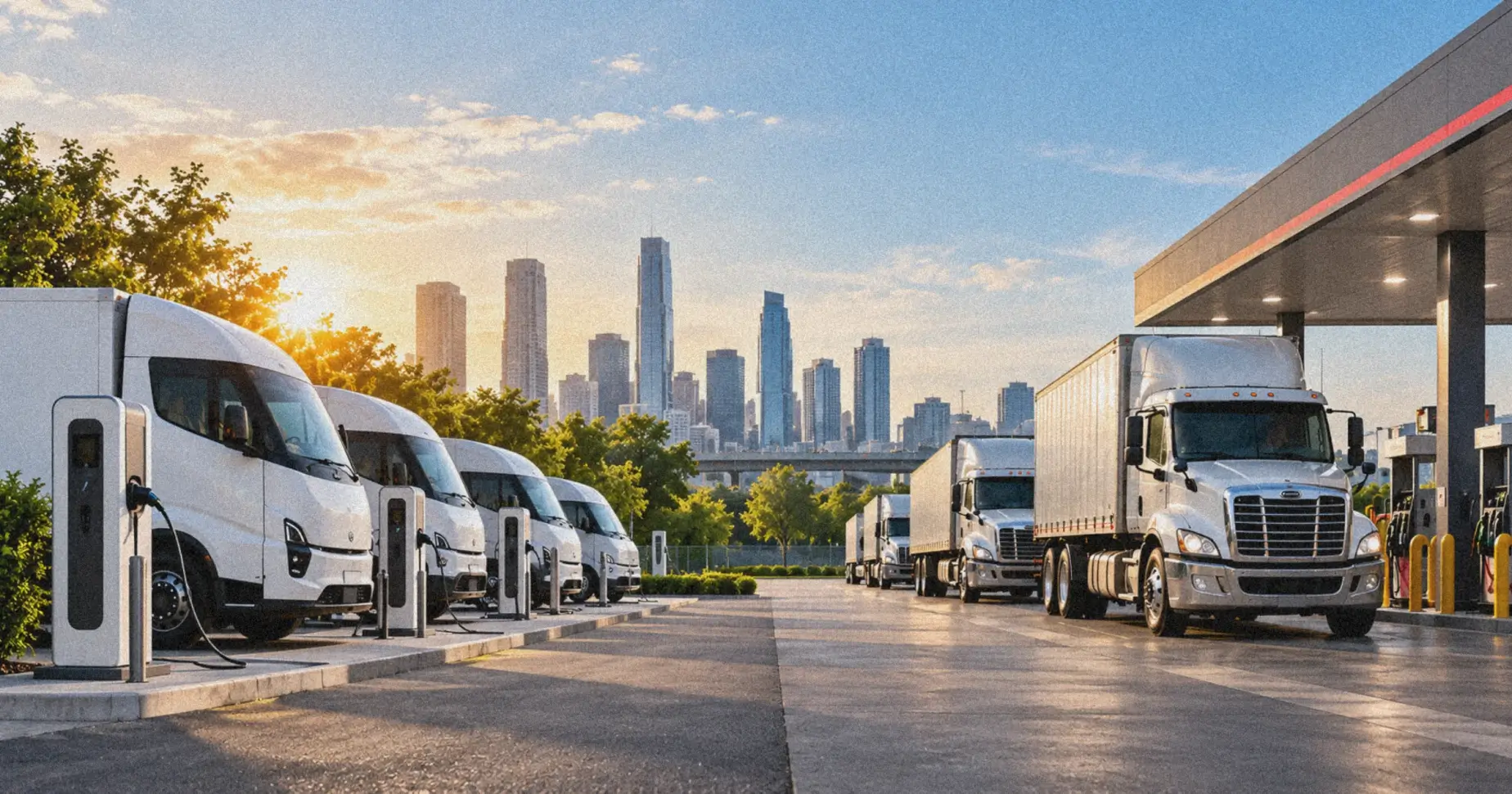
The honest answer to fleet electrification vs. diesel efficiency is that it depends on the vehicle, the duty cycle, and the route. This guide lays out where each makes sense, what a mixed fleet looks like in practice, and what Fuel Logic does and does not do in that picture.

Fleet Electrification: Promise and Practical Limits
Why Companies Are Exploring EV Fleets
The U.S. Department of Energy’s Alternative Fuels Data Center lists several fleet benefits:
- Lower operating costs. It puts average operation and maintenance cost for light-duty all-electric vehicles at 6.1 cents per mile, and notes EVs usually need less maintenance.
- More stable energy prices. Electricity prices have been far steadier than gasoline and diesel.
- Meeting goals and requirements. EVs can help organizations meet environmental objectives and, for public fleets, certain policy requirements.
- Incentives can lower the purchase price.
Barriers to Full Electrification
The same source is just as direct about the constraints:
- Charging. You have to charge multiple vehicles while keeping operations moving, which means planning equipment, utility capacity, and sometimes electrical upgrades. Demand charges can add cost when many vehicles charge at once.
- Range. Medium- and heavy-duty EVs are more affected by heating and cooling loads, high speeds, heavy cargo, and auxiliary power use. AFDC says all-electric vehicles that drive 100 to 300 miles a day and plug in at night may suit a battery-electric vehicle.
- Upfront cost and availability. Work Truck notes that the up-front cost of the asset may be higher and that infrastructure investments are likely necessary. AFDC adds that production quantities for some medium- and heavy-duty EVs can be limited, with longer delivery times.
- Downtime. A charging session is dwell time. A fueling stop is shorter. AFDC says fast charging can add 100 to 200+ miles of range in 30 minutes.
What Fleet Managers Are Actually Doing
Fleets that move first tend to start with return-to-base duty cycles and shorter, predictable routes, which AFDC says suit current EV capabilities. Delivery vans, school buses, and refuse trucks are common examples. Long-haul, remote, and heavy-load work usually stays on liquid fuel for now.
Diesel Efficiency: Still the Workhorse for Heavy Operations
Diesel is not standing still either. You can lower diesel cost per mile without changing a single vehicle.
Where the Efficiency Is Hiding
Work Truck identifies speeding, harsh braking, and excessive idling as sources of fuel waste. Route planning, tire pressure, and vehicle maintenance also affect consumption. Telematics can help you spot patterns, identify opportunities for driver coaching, and flag vehicles that may need maintenance.
How you refuel matters, too. Fuel-station detours take drivers and vehicles away from scheduled work. Fuel Logic’s fleet fueling services bring fuel directly to your yard or jobsite, helping reduce those detours and keep your team focused on the job.
Emissions Control
Diesel engines equipped with selective catalytic reduction (SCR) use diesel exhaust fluid (DEF) to help control nitrogen oxide emissions. Fuel Logic supplies ultra-low-sulfur diesel and offers DEF delivery, including bulk options, for fleet operations. Fuel specifications and emissions requirements depend on your engines, location, and application, so confirm what applies to your equipment.
Comparing Total Cost
Compare vehicles on total cost of ownership, not the sticker price. The AFDC publishes a Vehicle Cost Calculator for exactly this. Here is what to compare:
| Factor | Electric (EV) | Diesel |
| Purchase price | Often higher; incentives may offset some | Typically lower upfront for comparable work |
| Energy cost | Electricity, more stable pricing | Diesel, varies with the market |
| Maintenance | Typically lower | Depends on engine and use |
| Range | Varies with load, speed, and conditions | Long; refuel in minutes |
| Refueling or recharging | Dwell time, planned around charging | Fast, and delivery can fuel overnight |
| Infrastructure | Chargers, utility capacity | Existing fuel supply, or delivery to your yard |
Use your own quotes and duty cycles. The right answer for a delivery van fleet is not the right answer for a gravel hauler.
The Transition Era: Hybrid and Flexible Fleet Models
Hybrid Strategies
- EVs for predictable, urban, return-to-base routes
- Diesel for remote, off-grid, or heavy-load work
- A mix by season or geography
Plug-in hybrids sit in between. AFDC notes they can fuel with gasoline or diesel when needed, which adds flexibility.
Infrastructure Planning
Install charging where the duty cycle supports it, and keep reliable liquid fuel access for the rest. Choose partners who are clear about what they cover.
Where Fuel Logic Fits in the Fleet Transition
Plainly: we handle the liquid-fuel side. If you are running diesel or gasoline vehicles, or equipment that will stay on liquid fuel for years, we can fuel it.
Supporting Diesel Fleets With Fuel Delivery
On-site fueling removes the station trip and keeps trucks working. Fuel Logic delivers on-road diesel, off-road diesel, gasoline, and DEF to yards and job sites, on demand or on a schedule. Scheduled delivery is where fleets get the best price.
Providing DEF for Emissions Control
Fuel Logic’s DEF delivery, including bulk options, helps fleets maintain a supply of diesel exhaust fluid for SCR-equipped vehicles.
What We Do Not Do
We do not supply EV charging or electricity. If your fleet is going mixed, you will need a separate answer for the electric side. We also do not deliver propane or natural gas.
Compliance and Reporting
Emissions rules and corporate targets vary by state, fleet, and engine. Check your own requirements and keep good records. For reporting, the EPA defines Scope 1 emissions as direct emissions from owned or controlled sources, including fuel combustion in vehicles, and Scope 2 as indirect emissions from purchased electricity. A mixed fleet has both, so you need records for each. Deliveries are logged with certified pumps and digital usage reporting, which helps with the liquid-fuel side.
⚡ Key Takeaways
- Electric vehicles can lower operating costs and emissions, but range, charging, and duty cycle decide where they work.
- Diesel remains the practical choice for many heavy, long, or remote operations.
- Most fleets end up mixed, with electric on predictable routes and liquid fuel elsewhere.
- Fuel Logic delivers diesel, off-road diesel, gasoline, and DEF. We do not provide EV charging.
Frequently Asked Questions
Is switching to electric vehicles cheaper in the long run? Sometimes. AFDC cites lower operating costs for electric vehicles, but purchase price, charging infrastructure, and duty cycle all matter. Run a total cost of ownership analysis for your specific vehicles and routes.
Can fleets run both diesel and electric vehicles? Yes, and many do. A common split is EVs on predictable return-to-base routes and diesel for heavy or remote work.
How much diesel does an average fleet vehicle use daily? It varies too much by vehicle, load, and route for a useful average. Pull your own numbers from fuel records or telematics.
What are the main barriers to EV fleet adoption? Charging infrastructure and utility capacity, range under load, upfront cost, and vehicle availability. AFDC lists these considerations for fleets.


