
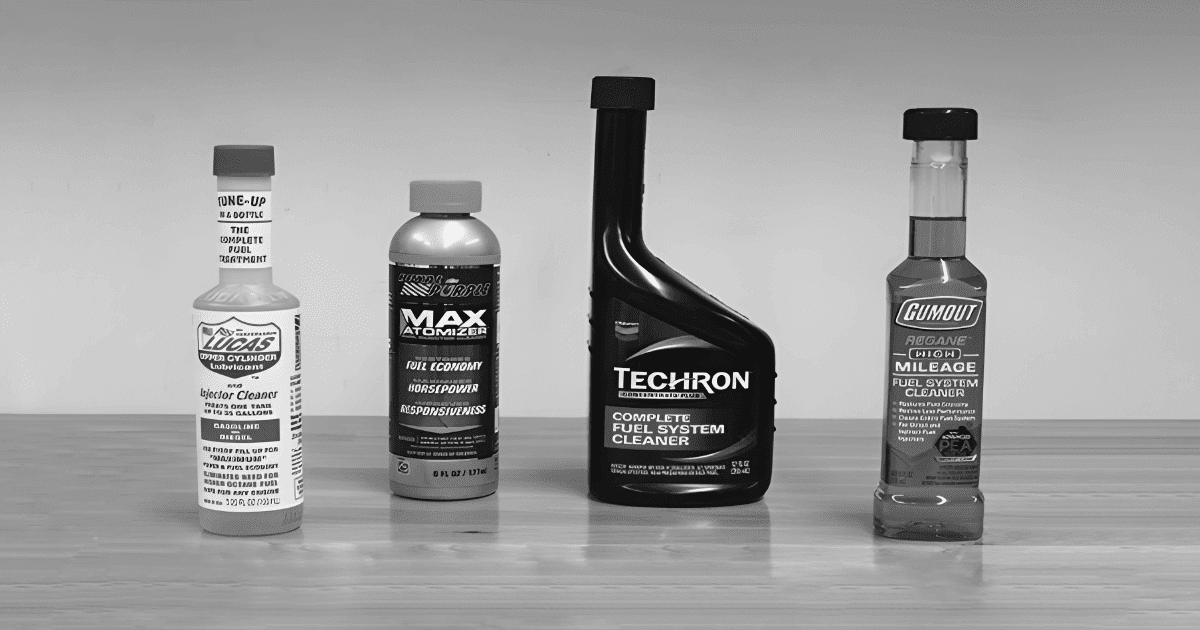
Noticing rough starts, sluggish performance, or poor gas mileage? Dirty fuel injectors could be the cause, and using a fuel injector cleaner may help restore performance and efficiency before the problem gets worse.
To use a fuel injector cleaner, pour the full bottle into a near-empty gas tank, then fill up with 10 to 15 gallons of fuel. Most cleaners suggest about an ounce per gallon, but check the label to get it right. Use the whole tank before your next treatment so the cleaner can circulate through the entire fuel system.
Cleaner injectors help your engine run smoother, burn less fuel, and stay out of the shop. If you want results you can feel, this is the one that works, and it’s a favorite among mechanics.
How to use fuel injector cleaner?
Here are the proper steps to use Fuel Injector Cleaner:
- Check your vehicle’s fuel tank capacity.
- Read the product label for concentration rate, usually one bottle for a full tank.
- Pour cleaner into the fuel tank before refueling.
“Do you put fuel injector cleaner in before or after the gas?” Well, add fuel injector cleaner before refueling. Pouring it into an empty or nearly empty tank ascertains it mixes well with the fuel for effective cleaning. - Next, fill the tank completely to mix after adding the cleaner to ensure even distribution.
- Then, use the full tank to let the cleaner work through the system. Drive normally until nearly empty.

What Is a Fuel Injector Cleaner and Does It Work?
- Fuel injector cleaner is a liquid additive poured directly into a vehicle’s gas tank.
- PEA (polyetheramine) is the most effective active ingredient in fuel injector cleaners.
- PEA-based cleaners dissolve carbon deposits, varnish and gum from fuel injectors.
- Clogged fuel injectors reduce engine performance and fuel economy.
- A quality fuel injector cleaner restores injector spray patterns as fuel flows through the system.
Independent testing by the Southwest Research Institute confirmed that PEA-based fuel injector cleaners restore up to 94% of injector flow when used correctly.

When used correctly, fuel injector cleaners work effectively. They can:
- Improve fuel economy by up to 3-5% in engines with deposit buildup
- Restore engine performance and smoother idling
- Prevent future buildup in high-mileage engines
Use a PEA-based fuel injector cleaner every 3,000-5,000 miles for best results. Regular use keeps injectors clean, supports efficient combustion, and extends engine life.
The Signs That Tell You It’s Time to Use a Fuel Injector Cleaner
You probably don’t need a mechanic to tell you something’s off. Here are the most common signs that dirty injectors are hurting your engine:
- Rough idling: Your engine vibrates or runs unevenly when you’re sitting still.
- Poor acceleration: The throttle feels sluggish or delayed when you press the gas.
- Engine misfires: The engine stutters or jerks, especially under load.
- Reduced fuel economy: You’re filling up more often without driving any differently.
- Difficulty starting: The engine cranks longer than normal before it catches.
- Check Engine light: A misfire code triggered by inconsistent fuel delivery.
- Strong fuel smell from exhaust: A leaking or clogged injector is letting excess fuel escape.
If you’re noticing two or more of these at the same time, a fuel injector cleaner is a good first step before spending money on a mechanic visit.
If your vehicles keep showing these symptoms, the fuel source could be the problem
We deliver high quality diesel and gasoline to fleets nationwide straight to your yard, no stops required.
How to Use Fuel Injector Cleaner: Step-by-Step
Using fuel injector cleaner is one of the simplest maintenance tasks you can do. There are no tools required, and it takes under two minutes. Here’s exactly how to do it right:
Step 1: Run Your Tank Down to About a Quarter
You want the cleaner to mix with fresh fuel at a higher concentration. Adding it to a near-empty tank (roughly a quarter tank or less) means the cleaner isn’t overly diluted before it starts working. If your tank is full, the cleaner still works, but at a weaker concentration.
Step 2: Check the Label Before You Open the Bottle
Different products have different concentrations. One bottle of BG 44K treats a full tank. One bottle of Sea Foam IC5 also treats up to 25 gallons. But some products are more concentrated and need less per gallon. Spend 30 seconds reading the label before you pour.
Also confirm the cleaner is compatible with your engine type. Most are designed for gasoline engines, but if you’re running diesel, a turbocharged engine, or a GDI (gasoline direct injection) system, make sure the label specifically lists your engine type.
Step 3: Pour the Cleaner Into the Gas Tank First
Open the fuel cap, pour the full bottle directly into the gas tank. Add the cleaner before you pump the gas, not after. This way, the fresh fuel you add immediately mixes with the cleaner as it flows in, giving you even distribution throughout the tank.
Note: Do you put fuel injector cleaner in before or after gas? Always before. Pouring gas on top helps mix the cleaner thoroughly.
Step 4: Fill Up With Fresh Fuel
After adding the cleaner, go ahead and fill the tank normally. Top-tier gasoline (from brands like Shell, Chevron, or Mobil) is ideal because it already contains higher detergent concentrations that work alongside the cleaner. But any fuel will work.
Step 5: Drive Normally, But Include Some Highway Miles
The cleaner works as fuel flows through the injectors during normal driving. You don’t need to do anything special. However, if you can include 20 to 30 minutes of highway driving in your first tank, do it. Running the engine at higher RPMs helps the cleaner reach and break down stubborn carbon deposits that low-speed city driving might miss.
Step 6: Use the Full Tank Before Your Next Treatment
Don’t add a second bottle until the first tank is mostly empty. You want the cleaner to fully circulate through the entire fuel system before you replenish it. Over the next 100 to 300 miles, most drivers notice improvements in smoother idling, better throttle response, and improved fuel economy.
Note: For severe clogging or engines that haven’t been treated in 50,000+ miles, you may need two or three consecutive treatments. If performance issues persist after three treatments, it’s time for a professional injector cleaning service.
Learn more about choosing the best fuel treatment for diesel to keep your system clean and efficient.
How Much Fuel Injector Cleaner to Use
The standard dose is one full bottle (typically 12 to 16 oz) per 10 to 15 gallons of gasoline, which works out to roughly 1 oz per gallon. Adjust based on your tank size and the product you’re using.
| Fuel Tank Size | Typical Dose | Frequency | Notes |
|---|---|---|---|
| Up to 10 gallons (compact cars) | 8–12 oz / Half bottle (or manufacturer’s low dose) | Every 3,000–5,000 miles | Use less for concentrated cleaners |
| 10–20 gallons (sedans, small SUVs) | 12–16 oz / 1 bottle | Every 3,000–5,000 miles | Most common bottle size |
| 20–40 gallons (large SUVs, pickups) | 16–20 oz / 1–2 bottles | Every 3,000–5,000 miles | Split into two doses if needed |
| High-mileage / heavy-duty engines (commercial/fleet) | 20–32 oz / Follow product high-mileage directions (may be repeat dose) | As recommended by product | Consider fleet-grade cleaners |
What Happens If You Use Too Much?
Using more than the recommended dose won’t clean faster. At high concentrations, the chemical solvents can irritate rubber seals and gaskets in the fuel system, potentially causing leaks over time. It can also dilute the fuel itself, affecting combustion quality. Stick to the label.
What Happens If You Use Too Little?
The cleaner simply won’t be concentrated enough to break down heavy deposits effectively. A half dose might maintain already-clean injectors but won’t do much if there’s significant buildup. When in doubt, use a full bottle.

When Is the Best Time to Use Fuel Injector Cleaner?
The single best time to add fuel injector cleaner is at oil change intervals, roughly every 3,000 to 5,000 miles. Pairing it with an oil change makes it easy to remember and keeps your fuel system maintenance on the same schedule as your engine maintenance.
Beyond the regular schedule, use it sooner if you notice any of the warning signs listed earlier in this guide, or in these situations:
- You’ve been using lower-grade fuel frequently (use it every 1,500-3,000 miles)
- Your vehicle has over 75,000 miles and has never had injector cleaning
- You just bought a used vehicle with unknown maintenance history
- Your vehicle has been sitting unused for more than a few months
- You’re preparing for an emissions test and want to reduce exhaust output
- You filled up from an unfamiliar station and noticed a performance drop afterward
Is It Safe to Use at Every Fill-Up?
Most products are safe for regular use, but there’s no benefit to using a full dose at every fill-up. Once the deposits are cleaned, maintenance doses every 3,000 to 5,000 miles keep them clean. Using it more often than that wastes money and in the case of harsh chemical formulas, can stress fuel system components over time.
Types of Fuel Injector Cleaner: Which One Do You Actually Need?
Not all fuel injector cleaners work the same way. The right option depends on your engine condition, mileage, and how severe the buildup is.
Liquid Additives (Most Common Option)
Liquid fuel injector cleaners are poured directly into your gas tank. They typically contain detergents like PEA or PBA that break down carbon, gum, and varnish inside the fuel injectors and fuel lines.
Many formulas also include:
- Anti-corrosion agents to prevent rust
- Lubricants to reduce friction
- Alcohol to absorb moisture
- Stabilizers to extend fuel life
How to use it correctly:
- Add the cleaner to an almost empty tank
- Fill up with quality top-tier gasoline
- A 12–16 oz bottle usually treats 10–15 gallons
This option is ideal for regular maintenance and mild performance issues like rough idle or slight fuel economy drops.
Spray-On Cleaners (Targeted Cleaning)
Spray cleaners are applied directly to intake components. They’re designed to remove carbon from areas like intake valves and the combustion chamber.
They can:
- Help reduce hesitation
- Improve throttle response
- Clean specific high-deposit areas
However, they don’t circulate through the entire fuel system like liquid additives do. They also require more hands-on application.
Best used when:
- You suspect heavier deposits
- You want targeted cleaning beyond routine maintenance
Professional Fuel Injector Cleaning (Deep Restoration)
If performance issues are significant, professional cleaning delivers the most thorough results.
Shops use:
- Pressurized cleaning systems
- Ultrasonic cleaning
- Flow bench testing to restore injector spray patterns
Testing from MotorTrend using RC Engineering flow bench equipment shows that major performance restoration typically requires professional-grade service.
This is best for:
- High-mileage vehicles
- Severe hesitation or misfires
- Poor fuel efficiency that additives haven’t fixed
Pairing this with a quality fuel filter helps extend results and reduce future buildup. Check this guide for finding the best fuel filter for your vehicle.
GDI vs Port Injection: Does It Change How You Use the Cleaner?
Yes, and this is where many guides get it wrong.
Port Fuel Injection (PFI)
In a port-injected engine, fuel sprays into the intake port before entering the combustion chamber. Because fuel flows over the intake valves, liquid fuel additives can help clean both injectors and intake valves.
For PFI engines:
- Liquid additives are effective for routine cleaning
- Regular maintenance can prevent buildup
Gasoline Direct Injection (GDI)
In a direct injection engine, fuel sprays directly into the combustion chamber. It bypasses the intake valves entirely.
That means:
- Liquid additives cannot clean intake valve carbon buildup
- Carbon can accumulate heavily on valves over time
For GDI engines:
- Liquid additives still help clean injectors
- Intake valves may require spray cleaning or professional service
- Walnut blasting is sometimes needed in severe cases
This distinction matters. If you drive a GDI vehicle and expect a bottle additive to fix intake valve buildup, you’ll be disappointed.
When Do You Actually Need a Fuel Injector Cleaner?
You may benefit from cleaning if you notice:
- Rough idle
- Hesitation during acceleration
- Decreased fuel economy
- Engine misfires
- Hard starts
For light symptoms, start with a quality liquid additive.
For persistent issues, consider targeted spray cleaning or professional service.
Best Fuel Injector Cleaners (2025 Rankings)
Not all fuel injector cleaners are equal. Professional-grade products use higher concentrations of PEA than over-the-counter options, which is why mechanics and dealerships reach for different products than what’s on the AutoZone shelf.
| Rank | Product | Application | Price | Key Advantage |
|---|---|---|---|---|
| 1 | BG 44K | Professional/Heavy deposits | $20-25 | Dealership-grade formula, 94% flow restoration |
| 2 | Chevron Techron | OEM maintenance | $12-16 | Mercedes-Benz & GM approved |
| 3 | Red Line SI-1 | Performance cars | $15-18 | High PEA concentration |
| 4 | Royal Purple Max-Clean | GDI engines | $14-17 | Formulated for direct injection |
| 5 | STP Super Concentrated | Budget maintenance | $5-7 | Best value for basic upkeep |
Professional Grade vs. Consumer Grade: What’s the Difference?
Professional-grade cleaners like BG 44K contain higher PEA concentrations than products you can buy off the shelf. EPA regulations limit the concentration of certain solvents in over-the-counter products, which is why consumer products test at 87-90% effectiveness while professional formulations reach up to 94%.
Choose professional grade when you have real performance issues, haven’t cleaned injectors in 50,000+ miles, or are dealing with rough idling that hasn’t responded to consumer products. Choose consumer grade for routine maintenance every few thousand miles.

Using Fuel Injector Cleaner in Fleet and Commercial Vehicles
If you manage a fleet of trucks, vans, or service vehicles, the rules for fuel injector maintenance are a little different from a personal car. Here’s what changes:
Higher Mileage Means More Frequent Treatment
Commercial vehicles accumulate miles fast. A service van running 50,000 miles per year needs injector treatment more frequently than a personal vehicle doing 15,000. Plan on cleaning every 10,000 to 15,000 miles for most commercial gasoline fleets, or follow the manufacturer’s recommendation for your specific engine.
Diesel Fleet Engines Need Diesel-Specific Cleaners
Standard gasoline injector cleaners are not formulated for diesel engines. Diesel injectors operate at much higher pressures and are susceptible to a different type of deposit called internal diesel injector deposits (IDIDs). Use a diesel-specific fuel system cleaner rated for your engine’s injection pressure. Products like Hot Shot’s Secret Diesel Extreme are built for this.
Fuel Quality Matters More at Scale
When you’re fueling dozens of vehicles from bulk diesel or gasoline storage, fuel quality has a direct impact on how quickly injectors foul. Water contamination, microbial growth, and sediment buildup in storage tanks all introduce contaminants into your engine. Regular fuel tank polishing and high-quality fuel delivery reduces how often you need aggressive injector cleaning.
Fuel Logic delivers clean, high-quality diesel and gasoline directly to your site, which reduces the contamination risk that leads to clogged injectors in the first place. If your fleet is dealing with recurring injector issues, the fuel source is worth investigating before you assume it’s the injectors themselves.
Fuel Logic delivers clean diesel and gasoline directly to fleet sites, reducing the contamination risk that leads to premature injector fouling and costly downtime.
Schedule Injector Treatment With Preventive Maintenance Windows
For fleets, the most efficient approach is to add fuel injector cleaner during scheduled oil changes or tire rotations. This keeps treatment consistent without adding a separate maintenance step and ensures no vehicle falls behind on the schedule.

Fuel Logic delivers clean diesel and gasoline directly to your fleet
No contaminated storage tanks. No fuel stops.
Just reliable on-site delivery 24/7.
Professional Cleaning vs. DIY Additive: When Each Makes Sense
Pouring a bottle into your gas tank is not the same as a professional ultrasonic cleaning or a dealer-level fuel system service. Here’s how to decide which one you actually need:
- Use a DIY additive for routine maintenance, mild deposit buildup, and early-stage symptoms like slightly rough idling or a small MPG drop.
- Use a professional cleaning service when the additive hasn’t improved performance after 2-3 treatments, when you have severe misfires or significant power loss, or when the vehicle has high mileage with no prior injector service.
- Consider ultrasonic cleaning (off-vehicle) for injectors that are severely fouled. This method physically cleans injectors in both directions and is the most thorough option available.
Professional cleaning costs more upfront but is often cheaper than repeatedly buying additives that won’t solve a severe deposit problem. Think of DIY additives as preventive maintenance and professional cleaning as corrective treatment.
⚡ Key Takeaways
- Using a fuel injector cleaner improves engine performance and fuel efficiency while reducing emissions.
- Pour the full bottle into a near-empty tank before adding fresh gas.
- Most bottles treat 10 to 15 gallons at roughly 1 oz per gallon.
- Use the entire tank before your next treatment so the cleaner fully circulates.
- Include highway driving in the first tank for best results on carbon deposits.
- Treat every 3,000 to 5,000 miles, or at every oil change.
- PEA-based cleaners are the most effective. BG 44K leads for professional use; Chevron Techron leads for consumer maintenance.
- If three consecutive treatments don’t fix performance issues, book a professional cleaning.
Frequently Asked Questions
Do you put fuel injector cleaner in before or after gas?
Add the fuel injector cleaner before pumping gas. Pouring the cleaner into the tank first, then adding fresh fuel on top, ensures the two mix thoroughly as gas flows in. This gives you an even distribution throughout the tank and maximizes the cleaner’s contact with the fuel system.
How long does it take for fuel injector cleaner to work?
Fuel injector cleaner starts working immediately as the engine runs, but you’ll typically notice real improvements after 100 to 300 miles of driving. The cleaner needs to circulate through the entire system and the deposits need time to dissolve. For best results, use the full tank before evaluating whether the treatment worked.
Do you pour the whole bottle of fuel injector cleaner in?
Yes, pour the entire bottle into your tank. Most fuel injector cleaners are packaged in single-treatment sizes (typically 12 to 16 oz) designed to treat one full tank. Splitting the bottle into smaller doses reduces the concentration below the level needed to break down deposits effectively.
Can I use fuel injector cleaner on a full tank?
Yes, you can use it on a full tank, but it’s less effective than adding it to a near-empty tank. When the tank is nearly empty, the cleaner mixes at a higher concentration with the fresh fuel you add, which makes it more potent. If you can only use it on a full tank, use a double dose to compensate for the dilution.
How often should I use fuel injector cleaner?
Use it every 3,000 to 5,000 miles for routine maintenance, or at every oil change. If you use lower-quality fuel regularly or notice performance issues, you can use it every 1,500 to 3,000 miles. High-mileage vehicles over 75,000 miles benefit from more frequent treatment due to increased carbon buildup in the combustion system.
Can I mix different fuel injector cleaners?
It’s not recommended. Different cleaners use different chemical formulations, and combining them can reduce their effectiveness or create interactions that stress fuel system components. Use one product at a time and follow that product’s instructions. If you want to switch products, wait until you’ve used a full tank after the first treatment.
How do I know if my injectors need cleaning?
The most common signs are rough idling, sluggish acceleration, engine misfires, reduced fuel economy, difficulty starting, or a ‘Check Engine’ light triggered by a misfire code. If you experience two or more of these at the same time, start with a fuel injector cleaner before paying for diagnostics.
What’s the best fuel injector cleaner for high-mileage vehicles?
For vehicles over 75,000 miles, BG 44K is the top choice because it’s the same product used by dealership service departments for severe deposit problems. Chevron Techron is a strong consumer-grade option and is OEM-approved by Mercedes-Benz and General Motors. Sea Foam Motor Treatment is a good option if you want a cleaner that addresses the entire fuel system, not just the injectors.
Is it safe to use fuel injector cleaner every fill-up?
Most products are technically safe for regular use, but there’s no benefit to using a full-strength dose at every fill-up. Once injectors are clean, a maintenance dose every 3,000 to 5,000 miles keeps them that way. Using high-solvent products more frequently than recommended can stress rubber seals and gaskets over the long term.
Can you use fuel injector cleaner in a diesel engine?
Yes, but you must use a diesel specific fuel injector cleaner. Standard gasoline formulas are not designed for diesel injection systems, which operate at much higher pressures.
Your injectors are only as clean as the fuel running through them
Fuel Logic delivers high quality diesel and gasoline straight to your fleet 24/7 nationwide.
Use a Fuel Injector Cleaner With High-Quality Fuel By Fuel Logic
For your fuel system to perform at its best, use a fuel injector cleaner with high-quality fuel. Trusted by leading businesses like Pepsi, Walmart, and TruTeam, Fuel Logic provides high-quality fuel and reliable fleet fueling service solutions tailored to your needs in any location you want.
Whether you manage a fleet of trucks, and trailers, or need onsite fuel, our mobile fuel team offers custom solutions.
Fuel Logic delivers clear or dyed diesel, gasoline, and DEF straight to your site, offering 24/7 on-demand service.
So fill out the form on our site to order bulk fuel delivery or call us for a continuous diesel supply for your fleet!




