
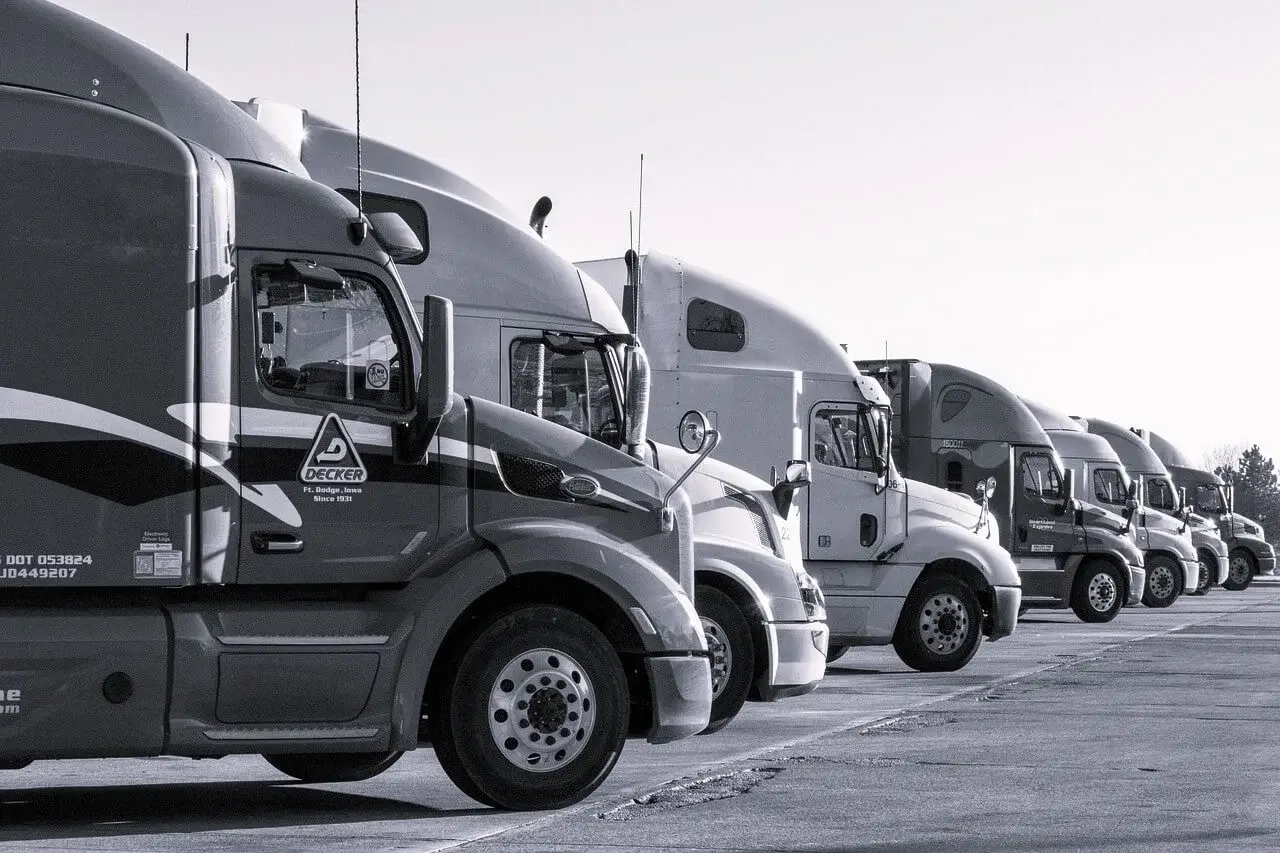
Commercial and government fleets burn a lot of fuel, which isn’t just rough on the environment. It’s expensive, too. You might think that smarter picks for fuel-efficient vehicles are enough to shrink the fuel usage and carbon footprint.
But even picking the most fuel-efficient cars with the best gas mileage can’t achieve this. You’ll need a proper plan, and teaming up with a company like Fuel Logic can turn this plan into a solution for saving money and cutting waste. This article examines how US fleets accelerate fuel consumption and emissions, alongside strategies to shrink them!

Source: Statista
Understanding Fleet Fuel Consumption
The vehicle fleets in America are not just an expense. They play a crucial role in the economy of the United States and in greenhouse gas emissions. There are millions of vehicles consuming billions of gallons of fuel annually. The majority are powered by gasoline that propels cars and light trucks.
Diesel powers heavy trucks, buses, and industrial vehicles since it is able to carry heavy loads and is efficient. This dependency on petroleum contributes to the expense and environmental footprint.
In 2023, about 80% of transportation-related CO₂ emissions in the U.S were from the burning of diesel and gasoline. In one day, the Americans consumed almost 375 million gallons of gasoline and 20.25 million gallons of diesel. It is a lot of fossil fuel, and it has an environmental impact.
The government definitely encourages more electric vehicles on the road and greater fuel economy. But economic realities and infrastructure gaps are making that shift slower than anyone hoped.
The Carbon Footprint of U.S. Fleets
The carbon footprint of a fleet is not limited to tailpipe emissions only. Scope 1 entails on-site emissions due to the combustion of fuel, such as CO₂, nitrous oxide, methane, and refrigerant leaks. Scope 2 is generated as a result of electricity that is used to recharge electric cars. Whereas the Scope 3 encompasses the production of fuel and vehicles, and the recycling of parts.
Scope 1 has constituted the biggest portion of the footprint for fleets that use gasoline or diesel. Fuel use directly drives CO₂ emissions. A gallon of gasoline emits almost 8,887 grams of CO₂. Therefore, an annual 100,000-gallon gasoline-fueled fleet produces nearly 889 metric tonnes of CO₂. per year. This is followed by diesel that yields about 10,180 grams per gallon.
Besides, medium- and heavy-duty vehicles make up just a small share of vehicles but produce 27.2% of U.S. transportation emissions. They have low fuel efficiency, are always in motion, and are heavy. Long-haul trucks can be as low as 68 mph with 6.77 mpg versus 27‑35 mpg with cars. This is the reason why regulators are going after heavy-duty vehicle emissions.

Strategies to Reduce Fleet Fuel Consumption and Emissions
To companies that own fleets, fuel is not only a cost. It has an effect on efficiency, sustainability, and the bottom line. We offer integrated solutions at Fuel Logic that address this challenge. Through our platform with powerful technology and actionable insights, we assist fleets in saving money and achieving sustainability objectives. The five strategies that we follow are:
AI-Powered Route Optimization
The best way to save fuel is to drive fewer miles. Fuel Logic’s AI platform goes beyond basic GPS, analyzing traffic, weather, delivery windows, and vehicle details to create the most efficient routes. It also offers dynamic route plans to avoid delay and reduce the miles, waste, and emissions, and save fuel between the first and last destination.
Fleet Telematics for Real-Time Monitoring
It is impossible to improve what you are not tracking. Fuel Logic’s telematics system gives a live view of your fleet’s fuel use. It highlights inefficiencies across vehicles, routes, and drivers. The system’s reports show exactly where fuel is being wasted, whether from poor driving, bad routes, or vehicle issues. Thus, managers can act and reduce expenditures.
Transition to Hybrid/Electric Vehicles
The future is electric because EVs diminish tailpipe emissions and save on fuel, as seen by many fleets. One example of this is a case study that demonstrates that the City of Boston’s public works department has reduced CO₂ emissions by 513,000 pounds, with it 18 electric vehicles.
It has also saved close to 86,000 in its fuel costs and is one step closer to its objective of 2030 fleet electrification. Fuel Logic can assist companies in planning the transition, from picking the right EVs and charging setup to calculating costs and ROI.

Predictive Maintenance Alerts
A vehicle that is in bad condition wastes fuel. Poor oxygen sensors, dirty air filters, as well as under-inflated tires will reduce efficiency by more than 10%. But Fuel Logic helps keep vehicles in good health. It delivers maintenance alerts to keep engines operating at optimum performance, conserves fuel, and avoids expensive breakdowns.
Driver Training for Eco-Friendly Habits
Drivers are crucial to saving fuel. Fuel Logic offers coaching to encourage flawless acceleration, steady speeds, and less idling. One research shows that aggressive driving, like hard braking and fast acceleration, wastes fuel, resulting in 40% more CO₂ emissions. Whereas calm driving can cut emissions by about 15%.
Regulatory Landscape and Compliance
The stipulations for fleet emissions are changing rapidly. They no longer consider tailpipe emissions alone, but include greenhouse gas emanations as well. These rules should be known to fleet managers so that they can make plans and deal with risk.
At the federal level, the Environmental Protection Agency (EPA) has established high standards for heavy-duty trucks and buses. The goals of these rules are the reduction of up to one billion tons of GHGs by 2032 and improving air quality. They will be rolled out between 2027 and 2032 and will provide manufacturers with a roadmap, so fleets will have time to adapt.
There will be more efficient engines, hybrids, and ultimately zero-emission vehicles (ZEVs), which will change vehicle options as well as the total cost. Better still is the Advanced Clean Trucks (ACT) rule that is being pursued by the states of California, New York, New Jersey, Massachusetts, Oregon, and Washington.
Such a requirement will ascertain that manufacturers will sell a greater number of ZEV trucks and buses in 2024, which will increase by 2035. These state activities hasten the transition, reduce the cost of technology, and develop infrastructure. National fleets operating in these states must plan carefully for a phased ZEV transition.
Benefits of Reducing Fleet Emissions
Greener fleets do not only begin with regulations or a saved cost, but the advantage extends to a greater level. Reduction of emissions improves finances, the environment, and the image of a company. Here’s how:
Cost Savings
Using less fuel reduces one of the biggest expenses. Drive smarter, take better routes, and switch to electric vehicles. These choices really add up. EVs are just built differently. With fewer moving parts, their brakes and engines don’t wear out so fast, and the ride feels smoother, too. On top of that, running an electric fleet pays off even more when you factor in government incentives, tax breaks, and grants.
Environmental Impact
The cleaner fleet activities benefit the planet and the nearby communities. Swap out old diesel vehicles and you’ll notice cleaner air. No more clouds of nitrogen oxides or tiny bits of pollution that harm your health. Besides, electric cars are quiet and don’t cause noise pollution in the neighborhood.
Corporate Responsibility
The environmental effect of a company shapes the brand and creates trust. Investors and customers demand the actual implementation of sustainability. So, reducing fleet emissions is a solution to Environmental, Social, and Governance (ESG) requirements, minimizing risk, and improving the reputation. Furthermore, a green fleet is innovative and sets the business up to meet future carbon prices and regulations.
⚡ Key Takeaways
- The U.S. transportation sector produces 28% of national greenhouse gas emissions, with fleets driving a large share through diesel and gasoline use.
- Medium- and heavy-duty trucks make up a small fraction of total vehicles but generate over a quarter of transportation-related emissions due to low fuel efficiency.
- Cutting fleet emissions requires an integrated approach. AI-powered route optimization, telematics tracking, predictive maintenance, driver training, and gradual EV adoption.
- EPA and state-level clean-truck regulations between 2027 and 2032 will push fleets toward zero-emission vehicles and improved fuel standards.
- Fleets that reduce fuel use gain measurable cost savings, improved ESG compliance, and a stronger reputation for sustainability.
Partner with Fuel Logic for Sustainable Fleet Solutions
It’s crucial to understand the relationship between the fuel price, MPG, and emissions so that you can have smarter fleet management. While anyone can employ a gas calculator to know the numbers, without that data, you’re only guessing at your biggest expense. But Fuel Logic puts you in control of your numbers. We use real-world average miles per gallon data and AI to cut costs, reduce waste, and support sustainability goals.
Our system spots inefficiencies and turns fuel data into measurable progress. Moreover, we keep every part of the fleet running smarter with route optimization, telematics, maintenance alerts, driver coaching, and EV support. Fuel Logic also provides a commercial fuel delivery service, including mobile diesel and on-site fuel delivery to reduce time spent at fueling stations. Order diesel delivery now and don’t just rely on a fuel cost calculator. Call Fuel Logic for sustainable fleet management solutions!
Cut Fuel Waste, Cut Carbon, Cut Costs
Stop reactive fueling. Start optimized fuel delivery.
Fuel Logic helps fleets fuel smarter and operate cleaner.
Frequently Asked Questions
How much can I save with fuel optimization?
Annual fuel savings of fleets can be up to 15-20%. For instance, that will be $15,000 to $20,000 saved on $100,000 spent due to less idling, smarter routes, and improved driving habits.
Does transitioning to EVs really pay off?
Yes. But ROI varies by use case. The greatest benefits are on urban delivery vans and medium-duty trucks, where fuel and maintenance expenses are 85-90% less per mile than diesel. Though initial investments are more expensive, savings and incentives can be obtained in the long term.
What’s the fastest way to reduce fleet emissions?
AI route optimization and driver coaching are the fastest means of reducing emissions. It requires no new vehicles and can reduce emissions 10-20% in one quarter by cutting unnecessary miles and fuel-wasting driving.


